Little Boy Singing Song Redwork: A Pro Review
As an embroidery designer who has spent years digitizing and reviewing files for commercial use, I approach every new machine embroidery design with a critical eye. It is not just about whether the image looks cute on a screen; it is about how that digital embroidery file translates into a tangible finished product that builds a brand. Today, I am taking a close look at Little Boy Singing Song Redwork. This specific design sits in the Music category, but its application goes far beyond simple decoration. For small business owners, boutique creators, and apparel decorators, this file represents a potential asset for branded merchandise, staff uniforms, and unique customer gifts.
First Impressions and Visual Personality
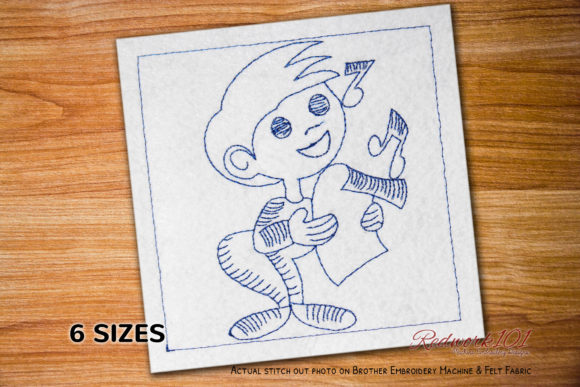
When I first loaded the preview for Little Boy Singing Song Redwork, the immediate impression was one of nostalgic charm. The "Redwork" style inherently suggests a handmade, rustic aesthetic that harkens back to traditional quilting and early 20th-century needlework. Unlike modern, high-density satin stitch logos that scream corporate rigidity, this design feels friendly, playful, and approachable. For a creative studio, a local bakery, or a florist looking to soften their brand identity, this visual personality is gold. It signals that the business values craftsmanship and warmth.
The description notes that the box stitch shown in pictures is optional and that the outer box color often varies. This flexibility is crucial for professional use. It means the design can be adapted to fit different colorways without needing a complete re-digitization. However, the single-color nature of traditional redwork means you must rely heavily on line weight and spacing. If the lines are too thin, they vanish on textured fabrics; if too thick, they merge. A professional review requires us to assume the digitizer has balanced these elements, but testing is non-negotiable.
Real-World Business Applications
So, where does Little Boy Singing Song Redwork actually work in a commercial setting? Let's move beyond the hobbyist mindset and look at small business merch strategies.
- Embroidered Patches: This is perhaps the strongest use case. Creating a woven or embroidered patch with this design allows a café or boutique to sell it as a standalone item or sew it onto denim jackets and tote bags. The redwork style looks exceptional on twill or canvas patch blanks.
- Staff Uniforms and Aprons: For a family-owned restaurant or a craft workshop, putting this design on an apron embroidery project adds a touch of whimsy. It breaks up the monotony of standard staff polos and makes employees feel part of a creative team rather than just service workers.
- Cap Embroidery: Placing this on the side panel of a baseball cap or the front of a beanie works well, provided the scale is adjusted. The simplicity of the line art prevents the "puckering" often seen with complex designs on curved surfaces.
- Tote Bag Design: Canvas totes are a staple for Etsy sellers and market vendors. A large-scale version of this design centered on a tote bag creates an instant "handmade product" vibe that justifies a higher price point.
- Product Packaging Accents: Small businesses can embroider this onto fabric tags attached to packaging, serving as a premium alternative to printed hangtags.
Critical Considerations for Production
While the aesthetic is strong, a professional embroidery designer must warn against blind production. There are specific scenarios where Little Boy Singing Song Redwork requires careful handling. Because redwork relies on outline stitches, stitch density is usually low. This is great for hand-feel but can be risky on items that undergo frequent industrial washing, like hotel uniforms or heavy-duty work shirts. The threads may snag or loosen over time if not secured with proper backing.
Furthermore, consider the fabric texture. On a smooth polo shirt, the lines will be crisp. On a fluffy towel or a coarse wool blend, fine details of the boy's face or the musical elements might get lost. If you are planning custom apparel for a client, always run a test stitch-out on the exact fabric they intend to use. Additionally, since the design description mentions an optional box, ensure you communicate clearly with your client about whether that border is included. Inconsistent branding—where one batch of shirts has a box and the next does not—can erode customer trust and visual consistency.
Impact on Brand Identity and Value
In the crowded marketplace of commercial embroidery, distinctiveness is key. Using a design like Little Boy Singing Song Redwork helps a brand stand out by rejecting the sterile, vector-perfect look of generic clipart. It humanizes the brand. When a customer sees this level of detail and stylistic choice on a product, it subconsciously communicates that the business cares about quality and detail. This perception directly influences product value. A simple t-shirt becomes a collector's item; a plain apron becomes a cherished tool.
For Etsy sellers and crafters, this design serves as a powerful tool for buyer engagement. It tells a story. The "Music" category connection suggests rhythm, joy, and creativity. Whether used for a music school's merchandise or a children's boutique, the emotional resonance of the image drives sales far better than a generic text logo.
Professional Designer Notes and Best Practices
Before you commit to a large production run using this embroidery file, adhere to these practical steps to ensure success:
- Test in Black and White: Ignore the color preview initially. Stitch the design in black thread on white fabric. This reveals the true structure of the digitizing and highlights any spacing issues that colors might hide.
- Check Small Patch Viability: If you intend to make small patches (under 2 inches), verify that the facial features of the boy do not merge into a blob. You may need to request a resized version from the vendor.
- Review Thread Contrast: Since this is likely a low-color count design, the contrast between the thread and the garment is vital. Ensure your thread colors pop against the base material.
- Confirm Hoop Size: Check the dimensions against your machine's capabilities. While redwork is often compact, ensure you have the correct hoop size to avoid re-hooping mid-design, which can cause alignment shifts.
- Use Proper Stabilizer: Even with low density, using a cut-away stabilizer is recommended for items that will be washed often, ensuring the design remains stable and does not distort the fabric.
- Create a Printable Mockup: Before stitching, create a printable mockup to show your client. This manages expectations regarding size and placement.
- Verify Licensing: Crucially, confirm the commercial licensing terms. Just because you bought the file does not automatically grant the right to sell thousands of embroidered units. Ensure the license covers your intended volume of design assets usage.
In conclusion, Little Boy Singing Song Redwork is more than just a pretty picture; it is a versatile tool for the savvy embroidery entrepreneur. When applied with technical precision and strategic thinking, it elevates small business merch from commodity to collectible. By respecting the limitations of the redwork style and leveraging its nostalgic appeal, you can create branded items that resonate deeply with customers and stand the test of time.