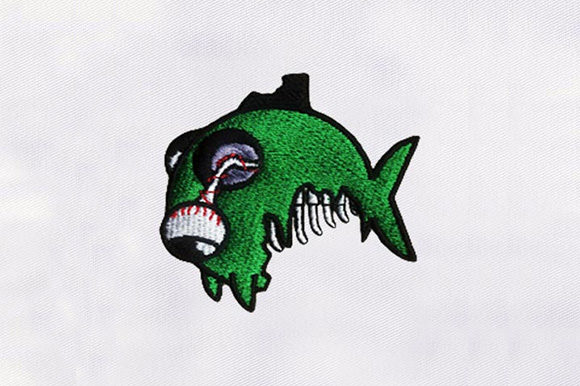
Terrible Fish: A Designer's Take on This Quirky Motif
As someone who spends more time staring at stitch maps than most people spend looking at actual art, I approach every new machine embroidery design with a mix of skepticism and curiosity. When I first loaded the Terrible Fish file onto my screen, the name alone caught my attention. It suggests something humorous, perhaps a bit grotesque, or maybe just endearingly ugly in that way only handcrafted items can be. After reviewing the layout and simulating the stitch-out, I can say this design has a distinct personality that demands the right canvas to truly shine.
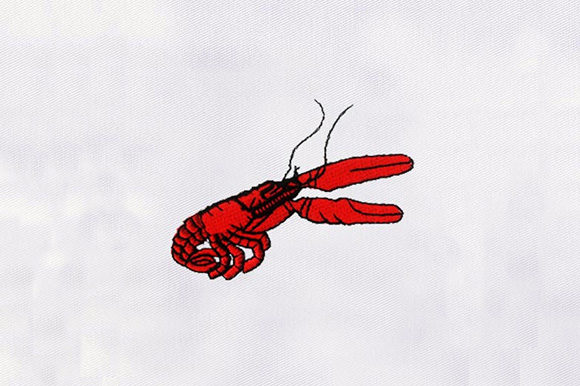
The visual mood of Terrible Fish is playful yet bold. It doesn't try to be a realistic marine biology illustration; instead, it leans into a stylized, almost cartoonish aesthetic that works exceptionally well for modern handmade products. The shape is organic but defined, making it versatile for various applications without losing its character. For embroidery designers and small business owners, this kind of clear visual identity is gold. It translates well from a digital embroidery file to a physical finished product, ensuring that the humor and charm aren't lost in the translation of thread and fabric.
Real-World Application: The Custom Tote Bag Test
To truly understand how Terrible Fish performs, I imagined a specific real-life scenario: creating a line of custom tote bags for a local beachside boutique. These aren't just grocery runners; they are statement pieces meant to be sold as small shop products or Etsy listings. The goal was to create something that would make a customer smile immediately upon seeing it.
In this context, the design excels. Placed centrally on a heavy-duty canvas tote, the Terrible Fish motif becomes the focal point. The lines are clean enough to hold up against the texture of the canvas, and the whimsical nature of the fish complements the casual vibe of the bag. If you are an Etsy seller or a craft business owner, this is the kind of design asset that drives impulse buys. It's not just a fish; it's a conversation starter. Whether used for a personalized gift or as part of a larger collection of ocean-themed custom apparel, the design adds immediate value through its unique character.
Beyond tote bags, I can see this working beautifully on sweatshirt embroidery projects. Imagine a oversized, neutral-colored crewneck with Terrible Fish stitched large on the back or small on the chest pocket. It fits perfectly into the current trend of quirky, illustrative streetwear. For baby embroidery, provided the stitch density isn't too harsh, it could adorn a burp cloth or a nursery wall hanging, bringing a sense of fun to the room without being overly juvenile.
Navigating Fabric and Stitch Challenges
However, a professional review wouldn't be complete without addressing the technical hurdles. While Terrible Fish is charming, it requires careful handling depending on your chosen medium. One of the primary concerns with any illustrative design is stitch density. If the file relies heavily on dense fill stitch areas to create the body of the fish, it might become stiff on lighter fabrics like thin cotton t-shirts or delicate linens used for tea towels.
Before committing to a production run, I strongly advise testing the design on scrap fabric that matches your final material. Pay close attention to how the running stitch outlines interact with the fabric weave. On textured fabrics like Terry cloth or waffle weave, fine details might get lost. In such cases, you might need to adjust your stabilizer strategy. A cut-away stabilizer is often safer for garments that will undergo frequent washing, ensuring the Terrible Fish doesn't pucker or distort over time.
Another critical factor is the hoop size. Depending on the complexity of the fish's fins or facial features, you need to ensure your machine's hoop can accommodate the design without cutting off essential elements. If you are planning to use this on curved surfaces like caps or hats, be extra cautious. The curvature can distort the perspective of the fish, potentially making it look warped. For embroidered patch creation, however, this design is ideal, as the stable backing of a patch mitigates many fabric-related issues.
Color Strategy and Visual Impact
The success of Terrible Fish also hinges on your thread colors selection. Since the design likely relies on contrast to define its "terrible" yet cute features, sticking to high-contrast combinations is key. A dark fish on a light background, or vice versa, ensures the silhouette remains recognizable from a distance. For those creating printable mockups or digital previews for their online stores, testing the design in black and white first is a smart move. If it holds up in monochrome, the structural integrity of the design is sound, and adding color will only enhance its appeal.
Be mindful of thread color blending if the design uses gradient effects. Poorly executed gradients can look muddy, especially on lower-resolution machines. Simplicity often wins here; letting the shape do the talking with solid blocks of color can result in a more professional-looking handmade product. This approach also aids in brand consistency if you are using this motif across multiple product lines, from aprons to pillow covers.
Commercial Viability and Final Thoughts
For commercial embroidery projects, the licensing terms are paramount. Before selling any items featuring Terrible Fish, you must confirm the license attached to the specific digital embroidery file you purchased. Some designers allow unlimited sales of finished physical goods, while others restrict the number of items or prohibit use in certain contexts. Never assume; always check the documentation provided with the 10O, ART, CND, DSB, DST, DSZ, EXP, HUS, JEF, PCS, PEC, PES, TAP, VIP, VP3, or XXX formats.
In terms of marketability, this design has strong potential. It appeals to a demographic that values humor and uniqueness in their holiday gifts or everyday accessories. It's the kind of item that gets shared on social media, driving organic traffic to your shop. However, remember that the perceived value of your finished product depends on the quality of the execution. A sloppy stitch-out ruins even the best design. Ensure your tension is perfect, your needles are sharp, and your stabilization is adequate.
Ultimately, Terrible Fish is a delightful addition to any designer's library. It offers a blend of whimsy and practicality that, when handled with care, can elevate a simple piece of fabric into a cherished item. Whether you are decorating a kitchen towel for a housewarming present or building a inventory for a craft fair, this design invites creativity. Just respect the technical requirements, choose your materials wisely, and let the personality of the fish do the rest. With the right approach, this little guy could become the star of your next successful embroidery project.