City Bus Machine: A Craft Fair Best-Seller Review
As an embroidery designer who has spent countless weekends manning booths at local craft fairs and handmade markets, I know that the difference between a design that gathers dust and one that flies off the table often comes down to immediate visual recognition. When I first loaded the City Bus Machine design onto my screen to evaluate it for my upcoming seasonal collection, my instinct was to see if it had that "stop-and-look" factor. In the world of Transportation themed Embroidery, buyers are looking for nostalgia, utility, and charm. This design immediately struck me as a perfect blend of modern minimalism and playful character, making it an ideal candidate for a wide range of craft fair product lines.
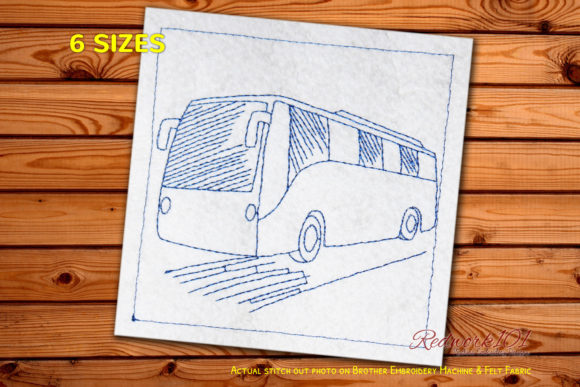
The first impression of City Bus Machine is undeniably bold yet approachable. It does not try to be overly intricate or realistic; instead, it leans into a stylized aesthetic that reads clearly from a distance. This is crucial for booth displays where customers are walking past tables at a brisk pace. The design feels cute without being childish, and modern without losing its warmth. For those of us running small shop product lines, finding a graphic that appeals to both parents buying for toddlers and adults looking for retro-cool decor is the holy grail. The optional box stitch mentioned in the description adds a layer of versatility, allowing us to frame the bus for a patch-like look or let it float freely on fabric for a cleaner, contemporary vibe.
Maximizing Sales Across Product Categories
When planning my inventory for the weekend market, I mentally placed City Bus Machine on various blanks to gauge its potential. Its performance varies slightly depending on the substrate, but the adaptability is impressive. For a tote bag design, this graphic is a winner. Tote bags are high-volume sellers at fairs, and a city bus motif resonates with urban dwellers and commuters. Placed centrally on a canvas tote, the design becomes a statement piece. The simplicity of the lines ensures that even on textured canvas, the shape remains distinct.
Moving to the kitchen sector, apron embroidery and tea towel embroidery are staple categories for handmade vendors. On an apron, the bus design works beautifully as a chest pocket accent or a lower hem detail. It adds a touch of whimsy to a functional garment. Similarly, on linen or cotton tea towels, the design translates well, provided the stitch density is managed correctly to prevent puckering on the lighter weight fabric. The description notes that the outer box color can be skipped; for towels, skipping the box often yields a softer, more integrated look that feels less like a logo and more like art.
For smaller impulse buys, an embroidered patch featuring the City Bus is a no-brainer. Patches are low-cost to produce and easy to display in glass cases or on cork boards. Because the design relies on strong shapes rather than tiny details, it scales down effectively for a 2-inch patch without losing clarity. Additionally, fabric pouches and zippered bags benefit from this motif, turning simple utility items into giftable handmade product favorites. Even cap embroidery is viable here, though it requires careful attention to the curvature of the front panel to ensure the bus does not appear distorted.
Production Realities and Practical Considerations
From a production standpoint, the viability of a machine embroidery design for batch production is just as important as its aesthetics. City Bus Machine appears to be optimized for speed and reliability. The lack of excessive fill stitches suggests a reasonable run time, which is essential when you need to churn out fifty tote bags before a Saturday morning rush. However, practical selling points must be balanced with technical execution.
One critical area to watch is the thread colors. The description hints that the outer box often utilizes a different color thread. While this adds definition, it also means more thread changes. For high-volume runs, you might consider simplifying the palette if the design allows, or grouping all "box" stitches together if your software permits re-ordering. Furthermore, when working on dark fabric, ensure that the underlay is sufficient to prevent the background from showing through the lighter threads of the bus body. A lack of contrast can make the design disappear, killing the visual appeal instantly.
Texture is another variable. If you are stitching on thick terry cloth towels or textured market bags, the fine lines of the bus windows or wheels could get lost. In these cases, increasing the satin stitch width slightly or opting for a larger hoop size to allow for a bigger rendition of the design can preserve clarity. Always remember that what looks crisp on a printable mockup on your computer screen may behave differently on actual fabric. The digital representation is a guide, not a guarantee.
Enhancing Brand Value and Customer Engagement
Incorporating City Bus Machine into your catalog does more than just add an item; it strengthens your brand narrative. For an Etsy seller or boutique maker, consistency is key. If your shop focuses on urban living, travel, or childhood nostalgia, this design fits seamlessly into that ecosystem. It signals to the buyer that you understand their lifestyle. When displayed correctly at a booth—perhaps stitched on a neutral-colored pillow cover next to a vibrant tote—the design draws the eye and invites conversation. Customers love asking about the story behind a design, and a city bus naturally evokes memories of commuting, city trips, or favorite childhood toys.
The visual appeal of this design lies in its balance. It is decorative enough to be a focal point but minimal enough to serve as an accent. This duality increases its perceived value. A customer is more likely to pay a premium for a finished product that looks professionally digitized and thoughtfully placed than one that feels like an afterthought. The clean lines suggest a high level of handmade quality, reinforcing the idea that your goods are superior to mass-produced imports.
Essential Designer Notes for Success
Before committing to a large production run of commercial embroidery products featuring this motif, there are several non-negotiable steps every professional should take. First, always test the digital embroidery file on scrap fabric that matches your intended final product. Do not skip this step. Check how the design behaves on both woven and knit fabrics.
- Stabilizer Selection: Choose the right stabilizer for your fabric weight. Heavy cut-away for stretchy knits and tear-away for stable wovens will prevent distortion.
- Spacing and Density: Inspect the stitch density closely. If the bus windows are too close together, they may merge into a solid block of thread. Adjust spacing if necessary.
- Mockups: Create at least one real physical mockup. Photograph it in natural light to see how it performs for online listings. A flat lay photo rarely captures the texture and dimension of embroidery as well as a styled shot.
- Licensing: Confirm commercial licensing terms before selling. The product description mentions optional elements but does not explicitly state license restrictions. Ensure you have the right to sell finished goods made with this design asset.
- Size Verification: Since exact dimensions and stitch counts were not provided in the brief description, verify the maximum and minimum hoop sizes compatible with the file to avoid resizing errors that degrade quality.
Ultimately, City Bus Machine represents the kind of versatile, reliable design that forms the backbone of a successful embroidery business. It bridges the gap between trendy and timeless, offering a safe bet for new collections while providing enough character to stand out in a crowded marketplace. By paying attention to fabric choices, stitch optimization, and presentation, you can turn this single embroidery file into a cornerstone of your finished product lineup, driving sales and delighting customers who appreciate the charm of the open road, stitched with precision and care.