Muslim Man Bluework: A Designer's Review for Real Projects
When I first pulled up the Muslim Man Bluework file on my screen, my immediate reaction was one of quiet appreciation. In a market flooded with overly complex religious motifs that often turn into thread nests on the machine, this design stands out for its restraint. As someone who spends hours hooping fabric and trimming jump stitches for clients, I look for designs that translate well from a digital preview to a tangible, stitched reality. This piece, rooted in the Religion category but executed with a modern Embroidery sensibility, feels like a versatile asset for any craft business looking to expand their custom apparel offerings without sacrificing quality.
First Impressions and Visual Personality
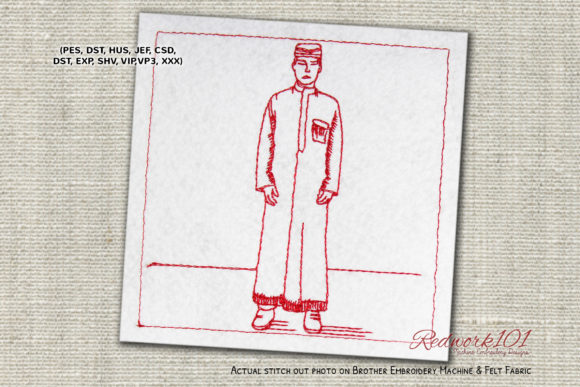
The visual personality of Muslim Man Bluework is defined by its clarity. Unlike some redwork or bluework designs that rely solely on running stitches which can sometimes look sparse on heavy fabrics, this design appears to have a thoughtful balance. The description notes that the "Box Stitch shown in the picture is optional," which is a crucial detail for a professional designer. It tells me that the core image—the figure of the Muslim man—is strong enough to stand alone, but the optional border offers flexibility for framing.
The mood it creates is respectful and serene. It avoids caricature, opting instead for a dignified representation that works beautifully for personalized gifts or boutique merchandise. The layout seems compact enough to fit within standard hoop sizes, yet detailed enough to hold attention when viewed up close on a finished product. For an Etsy seller or small shop owner, this kind of versatility is gold. You aren't locked into one specific look; you can adapt the design to fit the aesthetic of a minimalist tote bag or a more traditional pillow cover simply by toggling that outer box element.
Real-World Application: The Custom Tote Bag Scenario
To truly evaluate a machine embroidery design, I have to imagine it in a real-life scenario. Let's say a client approaches me for a set of custom tote bags for a community event or a religious study group. They want something durable, washable, and visually striking. Muslim Man Bluework is an ideal candidate here.
I would likely skip the optional box stitch for this application to keep the design clean against the canvas texture of the bag. Using a high-contrast thread color against a natural or dark cotton fabric would make the bluework lines pop. The simplicity of the design means it won't get lost in the weave of the fabric, a common issue with dense fill stitches on textured materials. Furthermore, because it lacks heavy saturation, the back of the embroidery will remain relatively flat, ensuring comfort if the bag is carried over the shoulder. This kind of practical thinking separates a hobbyist from a professional craft business owner; we don't just stitch; we solve problems for our customers.
Performance on Various Fabrics and Products
Beyond tote bags, this embroidery file shines across a spectrum of products. For sweatshirt embroidery, the open nature of bluework prevents the fabric from puckering, a frequent headache when working with fleece or heavy cotton blends. If you are creating baby embroidery items, such as a onesie or a nursery wall hanging, the soft lines and lack of dense underlay make it gentle against sensitive skin.
However, context matters. If you are planning to use this for an embroidered patch, you might want to engage that optional box stitch to create a defined edge for merrow binding or laser cutting. For holiday embroidery gifts, like kitchen towels or aprons, the design's cultural significance adds a layer of meaning that elevates a simple household item into a cherished keepsake. The key is understanding that while the design is versatile, its execution must change based on the substrate. A design that looks perfect on a crisp polo shirt might need different stabilizer support when applied to a stretchy t-shirt.
Critical Considerations for Professional Results
While Muslim Man Bluework is robust, there are areas where a designer must exercise caution. The note stating "The color of the outer box is a different color in most of the designs unless it is part of the design itself, you can ski" (likely meaning "skip") suggests that color separation is vital. If you are stitching on dark fabric, you cannot rely on the default thread chart. You must manually adjust your thread colors to ensure visibility. A navy blue thread on a black sweatshirt will vanish, ruining the effect.
Additionally, consider the stitch density. Bluework typically relies on running stitches or light fills. On thin or stretchy fabrics, this can lead to distortion if the stabilizer isn't up to the task. I always recommend testing the design on a scrap piece of your actual project fabric first. Check how the corners hold up; sharp angles in running stitch designs can sometimes pull apart if the tension is too high. If you are working on curved surfaces like caps, ensure the design size is appropriate for the limited hoop space and that the density isn't so light that the cap's texture interferes with the image clarity.
Enhancing Brand Value and Customer Trust
Using high-quality, culturally respectful designs like Muslim Man Bluework directly impacts your brand consistency and customer trust. When a buyer receives a handmade product that is well-executed, with clean stitching and appropriate imagery, they are more likely to return. This design allows commercial embroidery professionals to tap into a niche market with confidence. Whether you are selling digital embroidery files or finished goods, the professionalism of the source art reflects on your final output.
For those creating printable mockups for online listings, this design photographs exceptionally well. Its clear lines translate perfectly into digital previews, helping potential buyers visualize the finished product before purchasing. This visual clarity can significantly boost buyer engagement on platforms like Etsy or Shopify.
Final Designer Notes and Best Practices
Before committing to a production run, here is my checklist for working with this specific asset:
- Test First: Always stitch a sample on scrap fabric identical to your final material to check for puckering or registration issues.
- Color Contrast: Carefully select thread colors that contrast sharply with your fabric, especially since the design relies on line work.
- Hoop Size Verification: Confirm the design dimensions fit your available hoop sizes, particularly if you plan to add the optional box border.
- Stabilizer Selection: Match your stabilizer to the fabric weight; cut-away is often safer for garments that will be washed frequently.
- Licensing Check: Since this is a commercial asset, verify the license terms regarding selling finished items versus reselling the digital file itself.
- Detail Inspection: Zoom in on the digital file to inspect tiny details or lettering (if any) to ensure they won't merge during stitching.
In conclusion, Muslim Man Bluework is a thoughtful, adaptable addition to any designer's library. It respects the subject matter while offering the technical flexibility needed for diverse embroidery projects. By approaching it with the right preparation and an eye for detail, you can create stunning, meaningful products that resonate with your audience and stand the test of time.