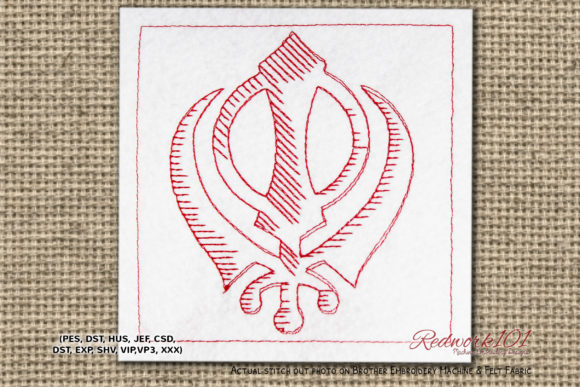
Sikhism Khanda: A Bold Redwork Design for Craft Fairs
As an embroidery designer preparing for a busy weekend at the local artisan market, my table strategy is everything. I need products that stop foot traffic, communicate quality instantly, and are practical enough to produce in batches without burning out. Today, I am reviewing the Sikhism Khanda redwork embroidery design to see if it earns a spot on my best-selling rack. This isn't just about aesthetics; it is about evaluating how a specific machine embroidery design translates into a tangible handmade product that resonates with buyers.
First Impressions and Visual Impact
The first thing that strikes me about the Sikhism Khanda is its inherent boldness. The Khanda symbol is iconic, geometric, and deeply meaningful within the Religion of Sikhism. When rendered in a redwork style, it sheds unnecessary complexity and relies on strong line work. This makes it feel modern, minimal, and premium all at once. Unlike overly cute or farmhouse-style motifs that might get lost in a crowded booth, this design commands attention through its symmetry and cultural significance.
For a craft fair seller, visual clarity is king. Customers walking past a booth make split-second decisions. The Sikhism Khanda works exceptionally well here because it is recognizable even from a distance. Whether stitched in traditional red thread for a classic look or adapted to match a brand's color palette, the design maintains its integrity. It feels decorative yet serious, making it suitable for a wide range of demographics who appreciate spiritual symbolism and clean Embroidery art.
Product Versatility for Market Tables
When setting up my display, I imagine where this digital embroidery file would shine brightest. The versatility of the Sikhism Khanda allows it to anchor several key product categories:
- Tote Bags and Market Bags: This is likely the strongest contender. A large-scale tote bag design featuring the Khanda on natural canvas creates an immediate statement piece. It appeals to customers looking for meaningful accessories.
- Aprons and Tea Towels: For the kitchen section of my booth, apron embroidery and tea towel embroidery using this motif add a touch of elegance. The redwork style complements linen and cotton textures beautifully, avoiding the "stiff" look that dense fills sometimes create on towels.
- Embroidered Patches: Creating small, iron-on or sew-on patches is a fantastic way to offer a low-price-point item. An embroided patch with this symbol allows customers to customize their own jackets or bags, increasing engagement.
- Caps and Pouches: While possible, these require more caution. The curved surface of a cap can distort linear designs if the hoop size and digitizing aren't perfect. However, a small pouch with the Khanda centered makes for a thoughtful, portable gift.
The description notes that the "Box Stitch shown in the picture is optional." This is a crucial detail for a producer. If I want a cleaner, more floating look on a dark fabric, omitting the box might be preferable. Conversely, keeping the box frames the symbol nicely on light fabrics, acting as a built-in border that saves me from having to hoop perfectly every single time.
Production Realities and Technical Considerations
Moving from concept to production, I have to think like a manufacturer. How does the Sikhism Khanda hold up under the needle? Redwork designs are generally favorable for batch production because they often use a single thread color, reducing thread changes and machine downtime. However, there are specific technical hurdles to address before listing this as a craft fair product.
Stitch Density and Fabric Texture: Since this is a line-based design, stitch density is usually manageable. However, on textured items like waffle-weave tea towels or thick denim tote bags, fine lines can sometimes sink in or appear jagged. I would strongly advise running a test on scrap fabric identical to your final product. If the lines are too sparse, the design might lack definition on rough fabric texture. Using a appropriate stabilizer is non-negotiable here; a cut-away stabilizer might be better than tear-away for items that will undergo frequent washing, like aprons.
Thread Colors and Contrast: The description mentions that the outer box color often differs. As a designer, I see this as an opportunity to play with contrast. On a black tote, a gold or white thread pops dramatically. On a white pillow cover, traditional red or deep blue offers a striking look. Always check thread colors against your specific fabric swatches before committing to a production run of fifty units.
Scaling and Clarity: One risk with symbolic designs is shrinking them too much. If you attempt to put the Sikhism Khanda on a small coin purse or as a tiny chest logo on a shirt, the intricate details of the double-edged sword and chakram might merge together. It works best as a medium-to-large focal design rather than a subtle accent. Ensure you confirm the minimum viable size with the file provider.
Maximizing Sales and Brand Consistency
For the Etsy seller or boutique maker, the Sikhism Khanda offers more than just a pretty stitch; it offers a narrative. Products with spiritual or cultural significance often carry a higher perceived value. Customers are not just buying a towel; they are buying a representation of faith and identity. This emotional connection can drive buyer engagement and justify a higher price point for your finished product.
To maximize this, your booth display should reflect the dignity of the symbol. Avoid cluttering the area around these items. Let the Sikhism Khanda stand out on a neutral background. For online listings, creating a high-quality printable mockup is essential. Since lighting can alter the perception of redwork, ensure your photos capture the true texture of the stitches. Use these images as design assets across your social media to build a cohesive brand story.
Furthermore, consider the repeatability of this design. Because it is symmetrical and likely uses standard stitches, it is excellent for commercial embroidery workflows. Once you dial in the tension and stabilizer combo, you can churn out dozens of units with consistent quality. This reliability is what turns a hobbyist setup into a profitable small shop product line.
Final Designer Notes and Licensing
Before you commit to selling items made with the Sikhism Khanda, there are a few housekeeping items to address. First, always verify the commercial licensing terms. Just because you purchased a digital embroidery file does not automatically grant the right to sell finished goods. Check the specific license included with your download.
Second, pay close attention to the note about the optional box stitch. If the file allows you to toggle this layer, experiment with both versions. You might find that the version without the box sells better on apparel, while the boxed version dominates in home decor.
Finally, respect the cultural weight of the symbol. Ensure your presentation honors the significance of the Khanda within the Sikh community. Authenticity and respect resonate with customers and build long-term trust in your brand.
In conclusion, the Sikhism Khanda is a robust, versatile, and visually powerful design. With careful attention to fabric choice, stabilizer selection, and respectful presentation, it has the potential to be a standout performer at your next craft fair or a top seller in your online handmade shop.